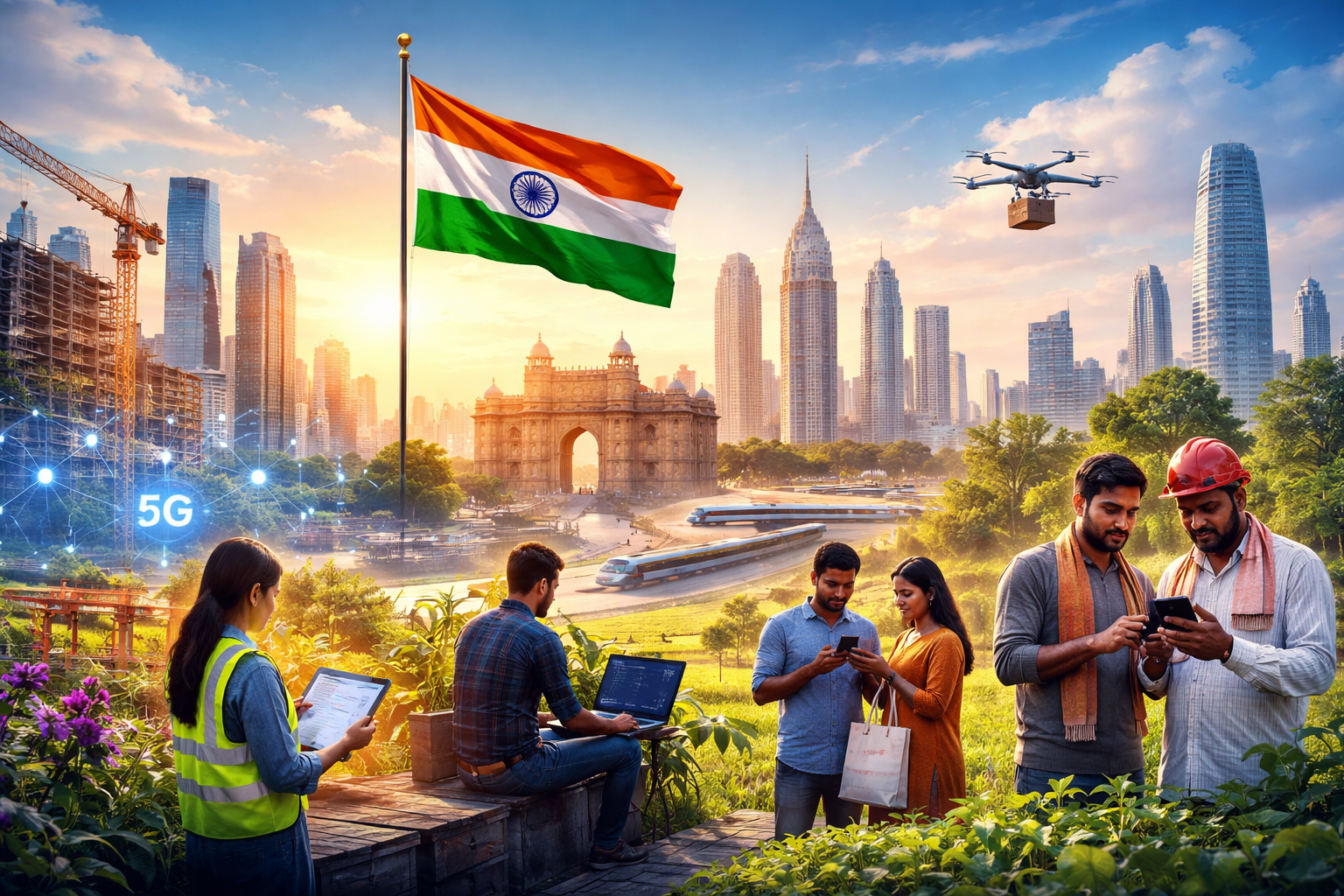

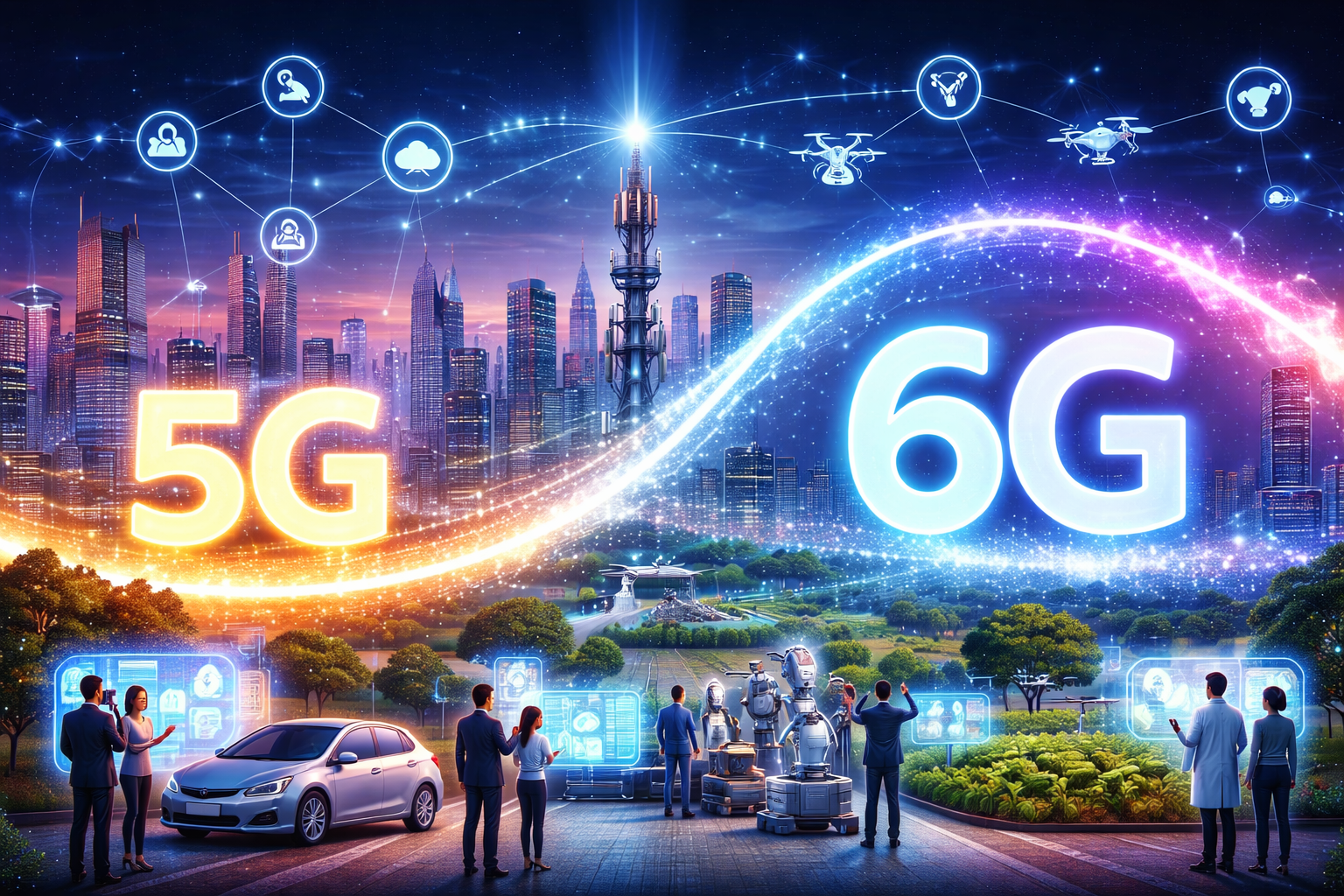
India’s digital journey has never moved at a faster pace. The rollout of 5G marked a turning point, not just in mobile internet speeds but in how technology began reshaping businesses, governance, and everyday life. As 5G networks continue to expand across cities and towns, conversations have already shifted toward the next leap—6G. While it may sound futuristic, India is actively positioning itself for this transition. The shift from 5G to 6G isn’t just about speed; it’s about redefining how the country connects, computes, and competes globally.
How 5G Changed India’s Digital Landscape
The introduction of 5G brought more than faster downloads. It unlocked low latency communication, higher device density, and improved network reliability. These improvements created opportunities far beyond consumer smartphone usage.
Industries such as manufacturing, healthcare, and logistics began experimenting with real time automation. Smart factories used connected machines to reduce downtime. Telemedicine platforms improved remote diagnostics through high quality video and data transmission. Even agriculture saw innovation through connected sensors and drones that improved yield prediction and water management.
5G also strengthened India’s startup ecosystem. Entrepreneurs gained access to infrastructure that supported cloud gaming, immersive content, AI driven services, and real time analytics. For a country with a massive digital population, 5G laid the groundwork for scalable innovation.
The Limits of 5G and the Need for 6G
Despite its advantages, 5G has limitations. As data consumption grows and new technologies emerge, the demand for ultra fast, ultra reliable networks will exceed what 5G can sustainably handle.
Applications like holographic communication, advanced robotics, digital twins, and real time AI collaboration require speeds, responsiveness, and network intelligence beyond current capabilities. This is where 6G enters the picture.
6G is expected to deliver data speeds several times faster than 5G, with near zero latency and deeply integrated artificial intelligence. For India, this evolution is less about luxury and more about long term competitiveness.
What 6G Really Means for India
6G is not just a telecom upgrade; it represents a convergence of communication, computing, and sensing technologies. Unlike previous generations, 6G networks will be designed to think, adapt, and optimize themselves using AI.
For India, this could mean:
- Intelligent traffic systems that react in real time
- Fully autonomous industrial operations
- Seamless interaction between physical and digital environments
- Advanced disaster response systems powered by real time data
6G will also support massive machine to machine communication, making smart cities more responsive and sustainable.
Government’s Role in Shaping the Transition
India’s government has already recognized the importance of leading rather than following in the 6G race. Policy initiatives now focus on building domestic capabilities, encouraging research, and reducing dependency on foreign technologies.
Public private partnerships are being encouraged to create testbeds for next generation networks. Academic institutions are being supported to conduct advanced research in areas such as terahertz communication, AI driven networking, and energy efficient infrastructure.
By investing early, India aims to contribute to global 6G standards instead of merely adopting them later.
Impact on Key Sectors
Healthcare
6G could transform healthcare through remote robotic surgeries, real time health monitoring, and AI powered diagnostics. Rural and underserved regions would gain access to advanced medical services without geographic limitations.
Education
Immersive learning using virtual and augmented reality could become mainstream. Students could attend virtual labs, interact with 3D simulations, and collaborate globally in real time, bridging educational gaps.
Manufacturing and Industry
Industry 5.0 concepts will thrive under 6G. Human machine collaboration, intelligent robotics, and predictive maintenance will become more precise and efficient, improving productivity and safety.
Agriculture
Precision farming will evolve further with connected sensors, autonomous equipment, and AI driven decision making. Farmers could receive real time insights tailored to specific plots of land.
Entertainment and Media
From holographic concerts to ultra immersive gaming experiences, content consumption will shift from screens to environments. India’s creative economy could see entirely new revenue streams.
Challenges India Must Address
While the promise of 6G is exciting, the path forward isn’t without obstacles.
Infrastructure development remains a major challenge. High frequency communication requires dense networks of small cells, which demand significant investment. Energy efficiency is another concern, as more powerful networks consume more power unless designed sustainably.
Digital inclusion also remains critical. As networks advance, ensuring affordability and accessibility across urban and rural regions will be essential to prevent a wider digital divide.
Cybersecurity will become more complex as billions of devices communicate autonomously. Strong frameworks must be established to protect data, privacy, and national infrastructure.
India’s Opportunity on the Global Stage
India is uniquely positioned to influence the future of digital connectivity. With one of the world’s largest user bases, a strong IT talent pool, and a growing manufacturing ecosystem, the country can become a global innovation hub for 6G technologies.
Local startups and research institutions can play a vital role by developing indigenous solutions rather than importing technology. This approach not only strengthens economic resilience but also ensures systems are tailored to India’s unique challenges and scale.
If India succeeds, it won’t just use 6G; it will help define it.
Looking Ahead
The transition from 5G to 6G is not an overnight shift. It is a gradual evolution that requires planning, collaboration, and long term vision. For India, this journey represents more than faster internet; it symbolizes digital empowerment, economic growth, and technological leadership.
As 5G continues to expand, the foundations for 6G are already being laid. The question is no longer if India will move to 6G, but how well prepared it will be when that future arrives.
India’s digital transformation is entering its most ambitious phase yet and the next generation of connectivity will shape how the nation lives, learns, and leads in the decades to come.