

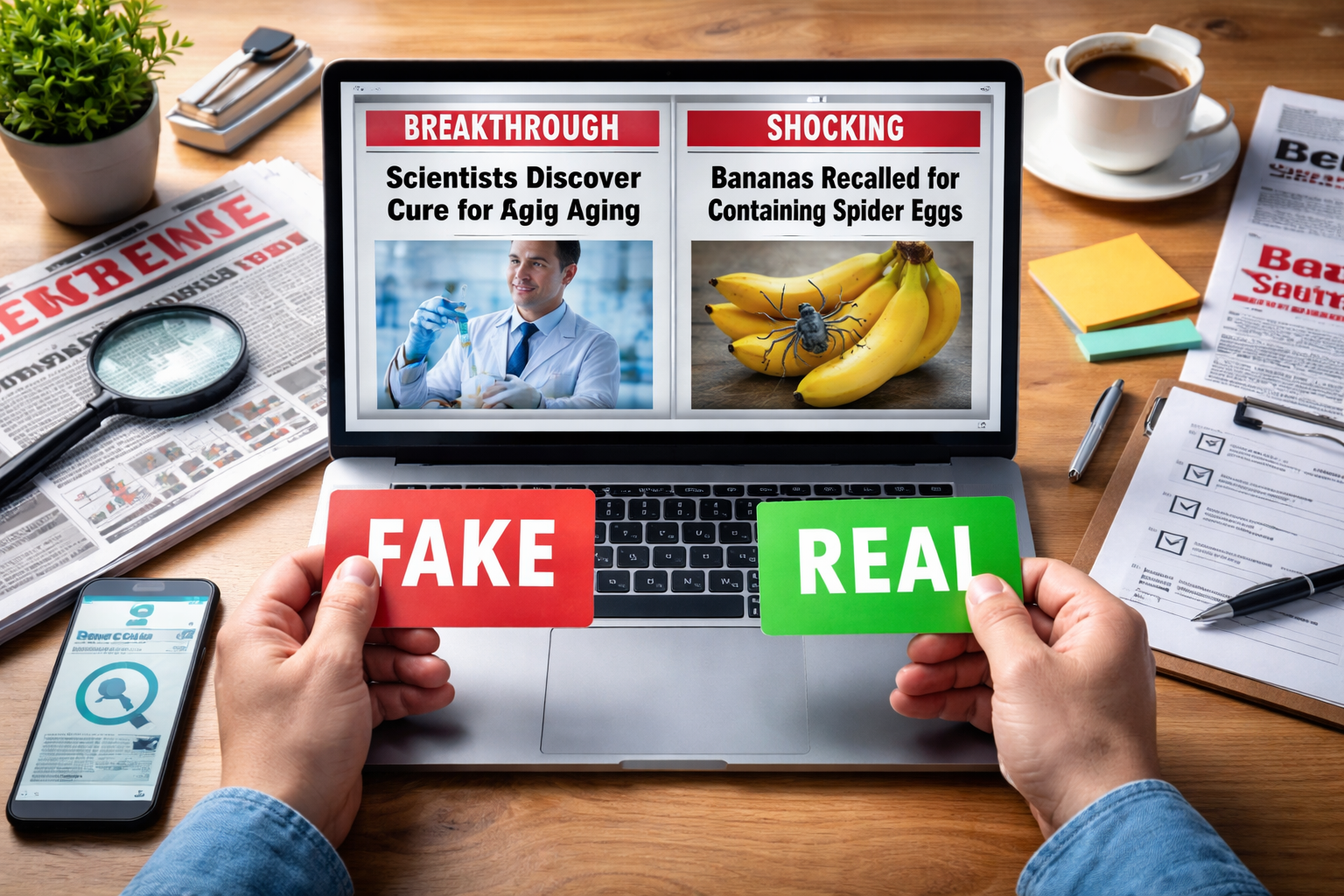
News speeds faster in 2025 than at any other time in history but so does misinformation. A single headline can go viral in mere minutes, taking along with it the molding of opinions before facts are checked. This is where the “Guess the Headline: Real or Fake News Challenge” slides in, not so much as a game for pure amusement but a strong reflection of how we consume information today.
What began as a meme on social media has evolved into a full on cultural movement, with educators and journalists, even corporate teams, using it to test one key skill: media literacy.
Fake news is still big in 2025.
News is also not going away, despite the publication of updated AI detection tools and fact checking platforms. Indeed, it has adapted. Headlines today are written with a ring of so much credibility, so provocatively emotive, and so data driven even when they aren’t.
The content created by AI, deepfake visuals, and manipulated statistics make it harder than ever to tell truth from fiction. According to global media studies, misinformation spreads faster than factual corrections because it often appeals to fear, curiosity, or outrage.
It makes the challenge of identifying real news entertaining, but necessary.
What Is the “Guess the Headline” Challenge?
The concept is simple: you’re shown a headline, and you’ve got to decide whether it’s real or fake.
But in 2025, that challenge has gotten significantly more sophisticated. Headlines these days interweave real events with exaggeration of claims, believable numbers, and authoritative language. Some fake headlines are purposefully softened, whereas some real headlines sound utterly unbelievable.
For instance,
“Bacteria have been found by researchers that can decompose plastic waste found in Ocean., Huh? Fake news. No, It’s not.
“Government bans AI written resumes in corporate hiring” is real sounding but fake.
The problem is, today, fake headlines really resemble a legitimate journalism.
Why Our Brains Fall for Fake Headlines
Human psychology plays a huge role in why fake news works. Factors make it more likely that an individual will accept News based on the:
Confirm our pre existing beliefs
- Elicit intense feelings
- Come from sources that appear credible.
- Are shared by people we trust
In 2025, too, social media algorithms still favor engagement. That means headlines that are shocking or emotionally laden get much more visibility, regardless of accuracy.
The problem demonstrates that habitually, we go with intuition rather than verification.
The Role of AI in the Fake News Era
AI is a two edged sword: on one hand, helping to generate professionally sounding fake headlines; on the other, it helps fact checkers identify certain patterns of misinformation.
Modern day fake headlines may include:
- Statistics that are accurate but out of context
- Actual quotes with slight modifications
- Names correct, actions false
- AI generated images that seem to be original
The challenge makes one point very clear: AI has blurred the line separating what’s believable and what’s truthful.
Why This Challenge Is Going Viral
The “Guess the Headline” challenge is so popular because of the accessibility involved: everyone reads headlines, but not everyone reads full articles.
People like:
- Testing their knowledge
- Competing with friends
- Surprised by their wrongness
- Learning without feeling lectured
These same challenges are now used by schools and universities for teaching verification practices to students, by news platforms for responsible audience engagement, and even in workplaces for digital literacy training.
Playing the Challenge Smartly
Guessing won’t help you get any better if you want to improve your ability at finding fake news. Here are some things experienced players look for:
1. Credibility of sources
Is the publication well known? Has it published a history of reliable reporting?
2. Headline Language
Fake headlines would feature extreme words such as “shocking,” “never seen before,” or “you won’t believe.
3. Lacking Information
Vague headlines that don’t provide dates, places, or names are red flags.
4. Emotional Manipulation
If a headline upsets you or overly excites you immediately, stop before believing it.
5. Cross Verification
Real news usually appears across several dependable platforms.
It is when you treat the challenge as a learning experience that it really starts to make more sense and not just as another game.
Real Headlines That Sound Fake (But Aren’t)
One of the reasons this challenge is difficult is that real news in 2025 can be genuinely surprising. Scientific breakthroughs, tech innovations, and social changes often sound exaggerated but are true.
From AI assisted surgeries to countries experimenting with four day workweeks, reality has become stranger than fiction. This makes skepticism healthy but cynicism dangerous.
Now, the aim is not to doubt everything, but rather to verify before trusting.
Fake Headlines That Sound Real
Conversely, fake headlines work because they read as journalistic in tone. They often contain:
- Official sounding institutions
- Possible timelines
- Partial truths mixed with lies
Many of those viral headlines of the past few years proved to be fake, but only after they reached millions. The challenge really underlines how fast misinformation can set in, in public opinion, before corrections manage to catch up.
Why This Matters More Than Ever
It is not just a matter of being misinformed; fake news can affect the results of elections, financial markets, decisions on public health, and social cohesion. A misleading headline may cause panic, spread hate, or ruin reputations in a matter of hours.
The “Guess the Headline” challenge reminds us that to be informed is a duty, it is not just a habit.
Final Thoughts
The “Guess the Headline: Real or Fake News Challenge 2025” is more than a fad it reflects a mirror in which we see how we all consume information in the digital age.
In today’s world, where headlines are shouting among themselves for attention, and truth is fighting against virality, the ability to stop, question, and verify is a potent skill. Whether you’re playing the challenge for fun or using it as a learning tool, it teaches one essential lesson: Not just reading the headlines, but thinking about them. In 2025, this would be the most important challenge of all.